Context
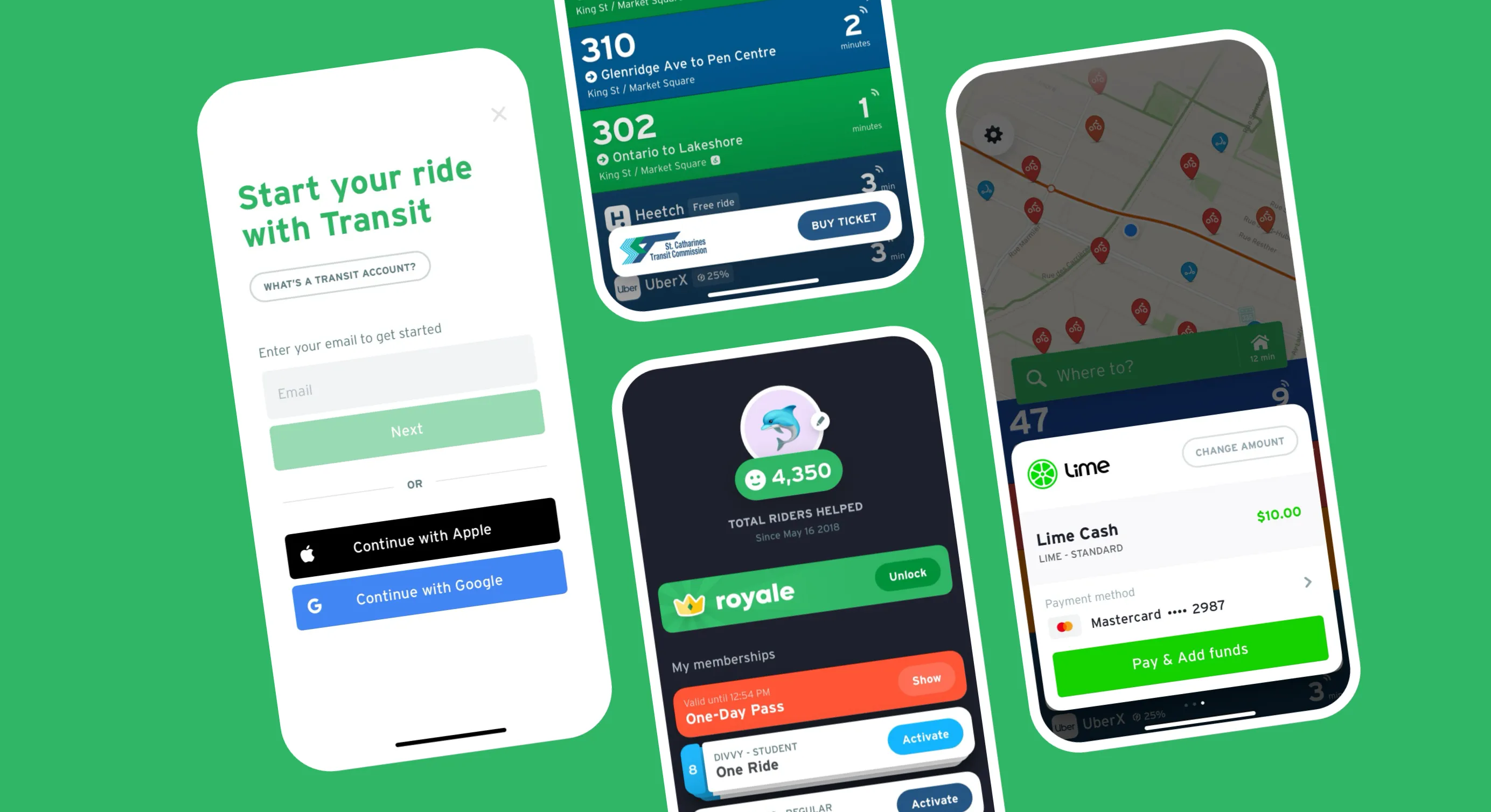
In late 2018, Transit excels at “how do I get there?” — already expert in trip planning and bus tracking. But “how do I pay / access / use” remains outside the app, handled separately by each service, making the experience partial and inaccessible. We then set out to explore a more complete experience for users.
Two signals showed the opportunity was real.
→ In Toronto, a first bikeshare integration showed immediate traction: 20% of 24h passes and 30–35% of unlocks were already going through Transit.
→ At the same time, a Uber integration test generated over 100,000 new accounts for the service in one year — proof that users are ready to centralize their mobility services if given the chance.
The friction was equally concrete: signing up for a simple car-share service could require up to 16 mandatory fields, to be repeated for every new service. Managing fares scattered across multiple apps requires motivation and skills.
Two questions therefore structured the project from the start:
✨ How can we let users simply use the transport around them via Transit?
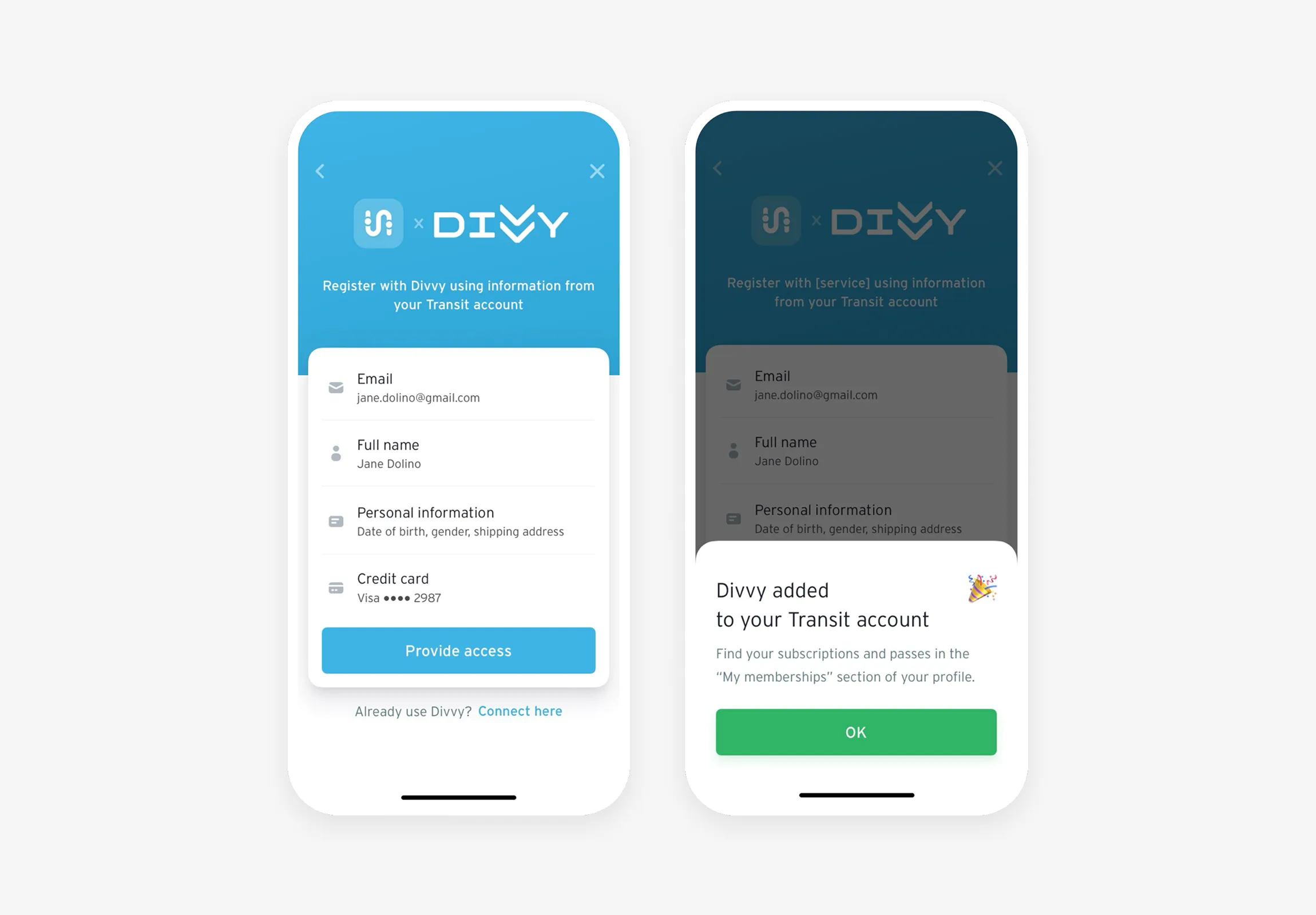
✨ How can we remove the barrier of multiple sign-ups?
Goals
- Enable purchasing transit fares directly in the app
- Integrate purchase flows into existing experiences to offer complete transport access: plan ➡️ buy ➡️ manage your fare ➡️ get guided
- Give users the power to compare services — speed, price — a trade-off that’s hard to make app by app
- Ultimately, demonstrate transport complementarity through combined offers, in partnership with agencies
Two ideas carry these ambitions:
- Instant sign-up: access a service by reusing data already provided elsewhere
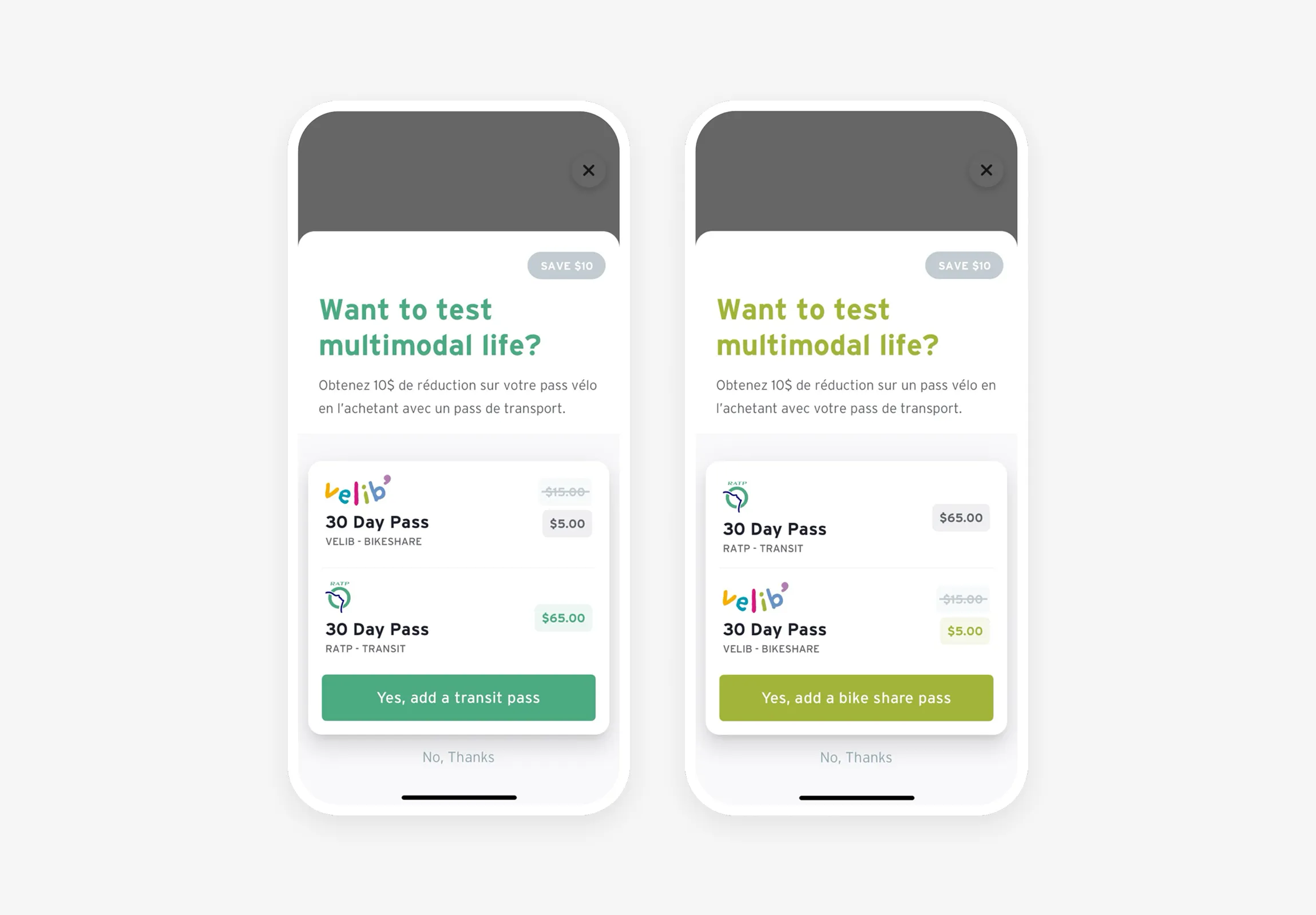
- Bundles: combine multiple transport modes in a single offer
Instant sign-up
Paris network bundles
My role
End-to-end system design, from initial vision to modular architecture, from the first pilot to iterations spanning several years, from early sketches to development follow-up including UX writing. Solo designer on this project, within a team of 5 designers at Transit.
Two challenges structured every decision:
Centralize access — a flexible architecture capable of accommodating any service, agency, or transport mode.
Maintain trust — with an existing engaged community wary of data collection: ask only for what’s strictly necessary, explain why, and let the user control what’s shared.
Process
Research — Benchmark of existing services (app, kiosk, verifications, usage), interviews with Business and User Support teams to understand and respond to real purchase and usage contexts.
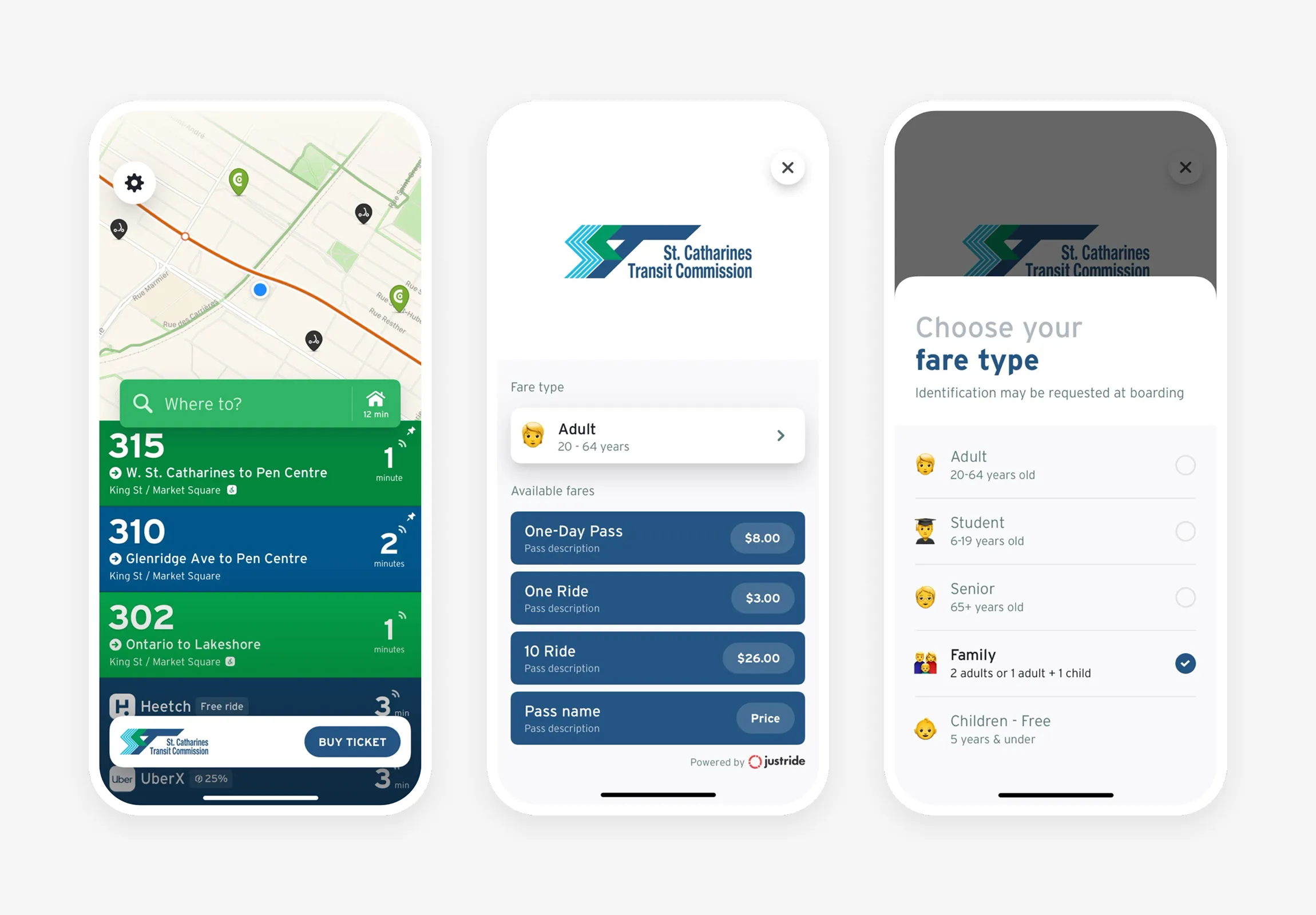
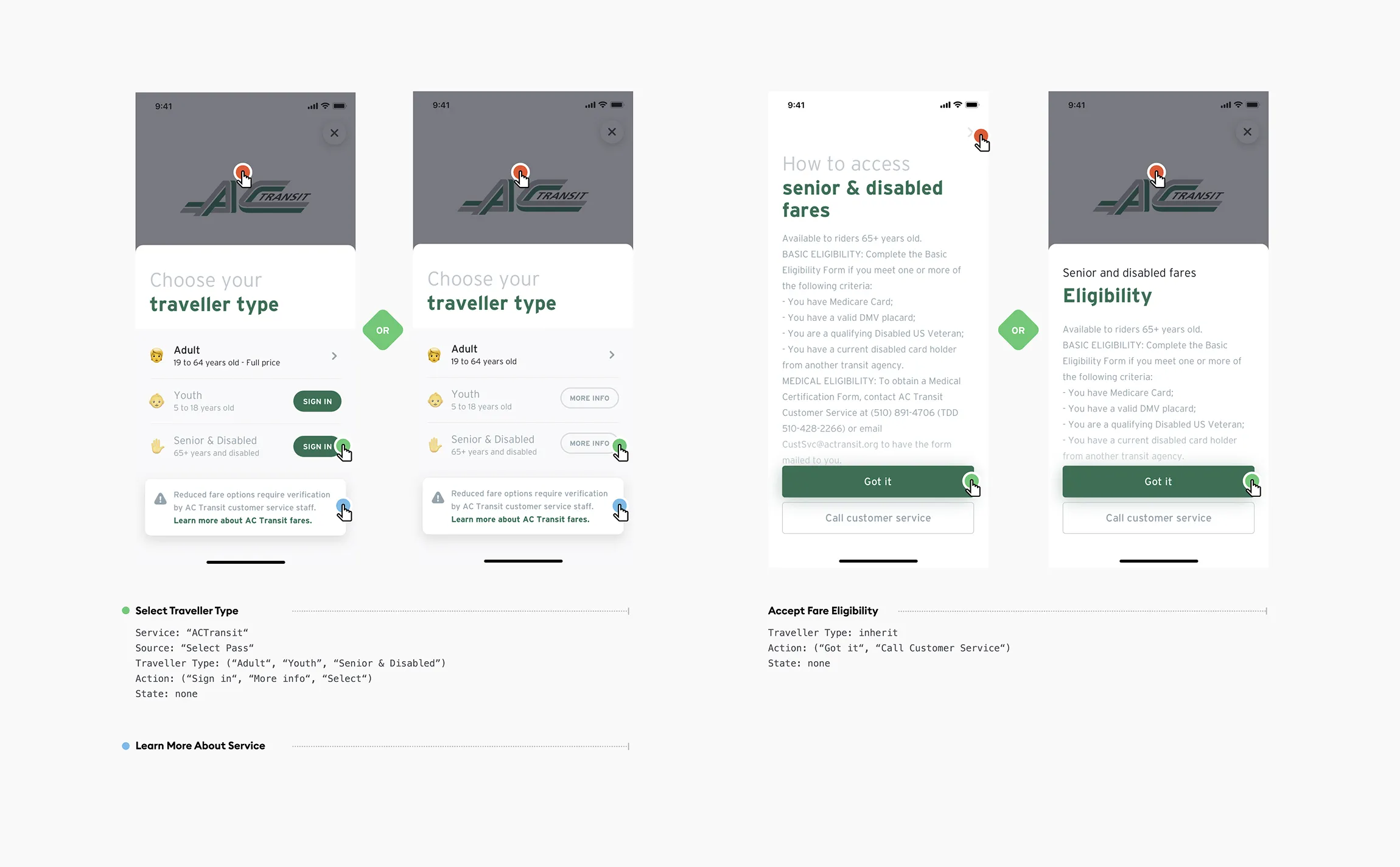
Definition — Architecture scoped to be reusable for any agency and any transport mode, validated on a first MVP (St. Catharines, Ontario) before scaling to other agencies and transport modes.
Ideation — User flows and usage scenarios mapped out for every existing entry point in the app, before designing the instant sign-up.
Development — Prototype testing, detailed specifications, development follow-up, usage tracking via Amplitude to inform iterations.
First MVP in St. Catharines, Ontario
Event planning for usage tracking
The system
At the heart of the project: the Transit Account, a modular sign-up/sign-in architecture designed to adapt to any agency or transport mode without rewriting.
Each service can connect by reusing data already provided from an external account or directly from Transit. Whether connected to the target service or not, the logic stays the same: never a re-requested field, never a forced account.
The system also introduces ticketing, with its variations: validating a bus fare has little in common with unlocking a bike.
A first pilot launched with St. Catharines (Ontario) on the bus network — a testing ground before deployment to other partners.
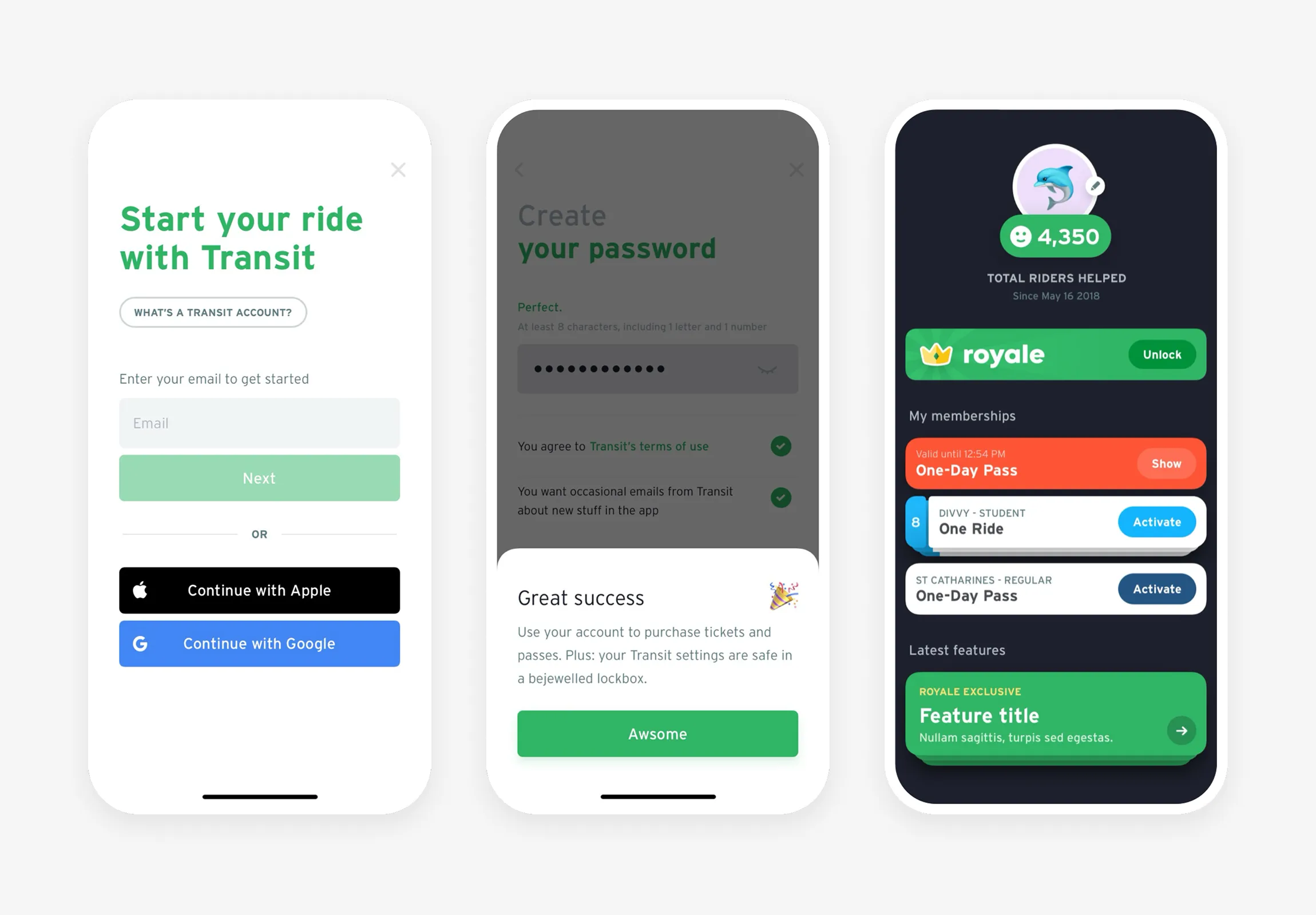
Transit Account
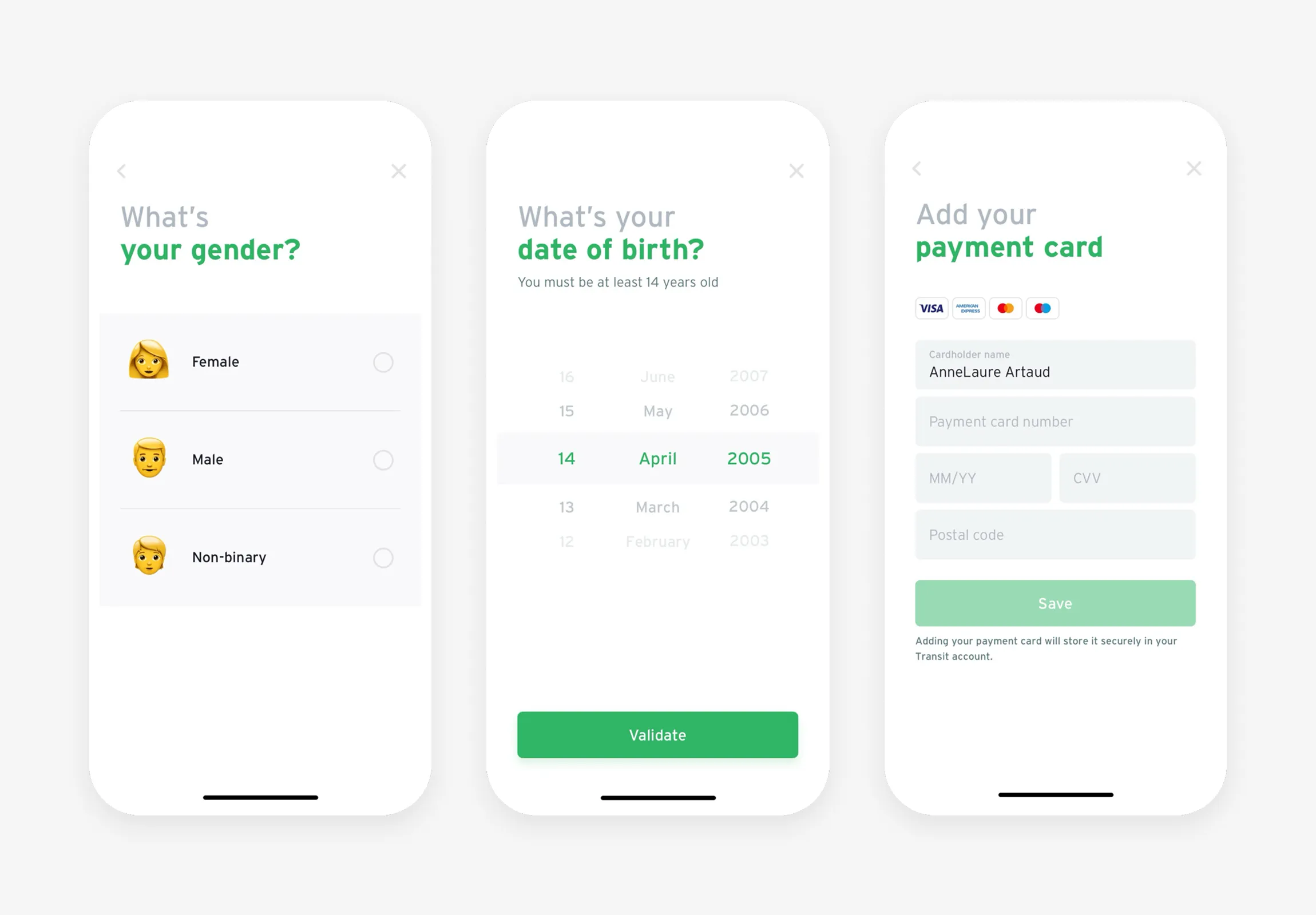
Sign-up modules
Iterations
Bike share — Extension of native unlocking to multiple North American networks, without leaving the app.
Apple Pay / Google Pay — Wallet integration into the purchase flow.
Bundles — First transport + bike pairings, in partnership with agencies.
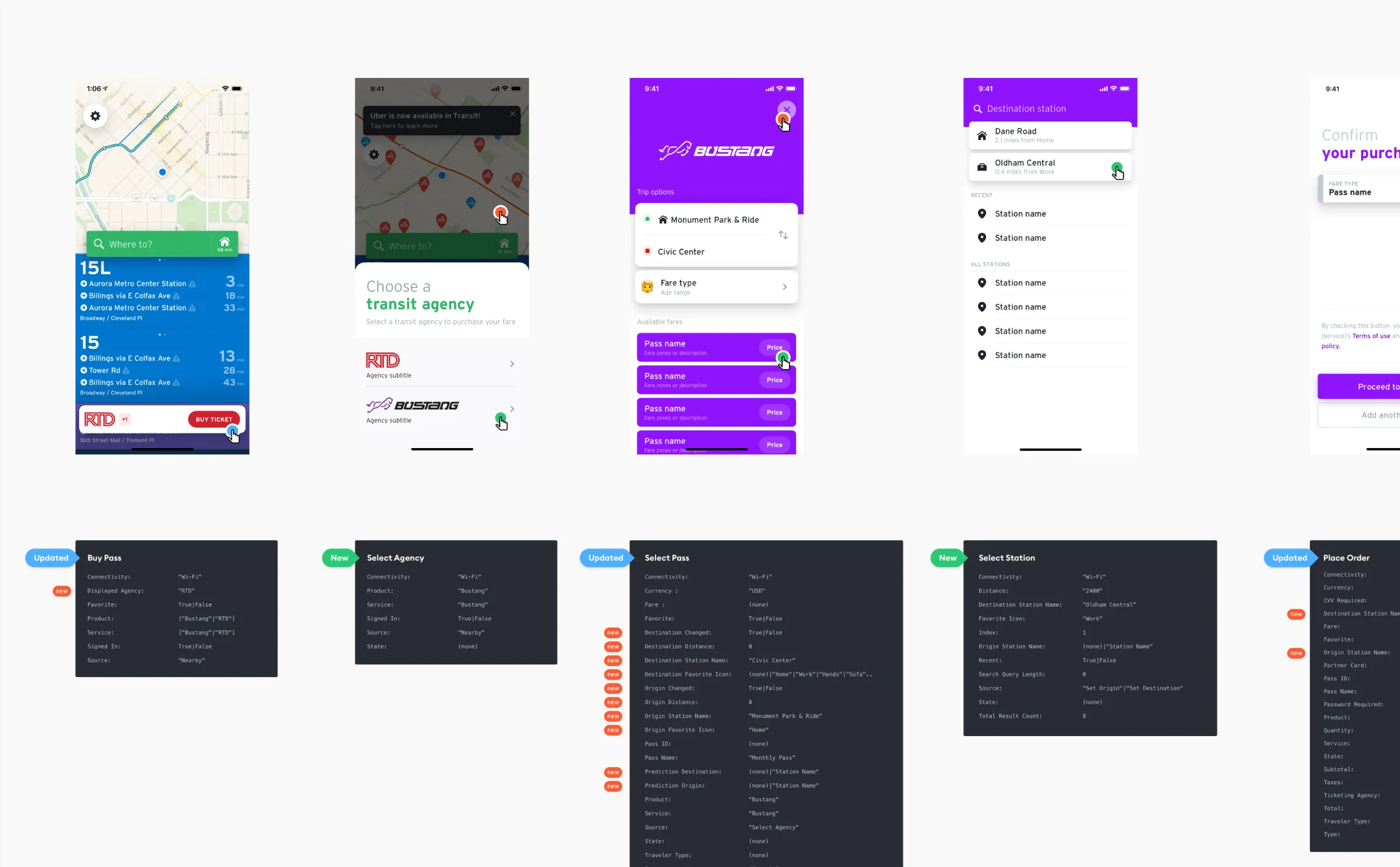
Ticketing Origin/Destination — Origin and destination-based ticketing, with minimal new components to remain adaptable to other OD networks. Pilots on tram and long-distance bus projects (Bustang, Colorado).
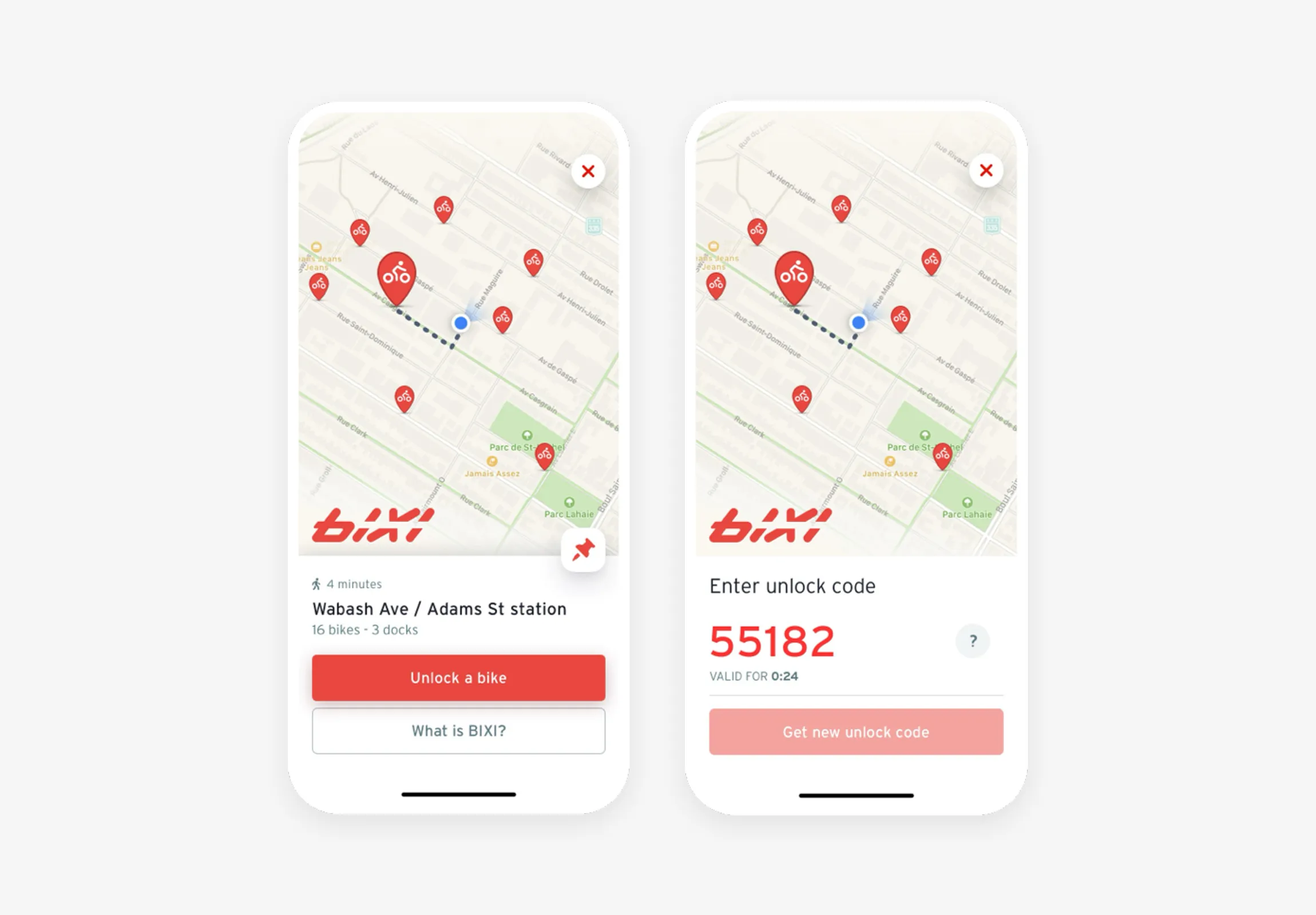
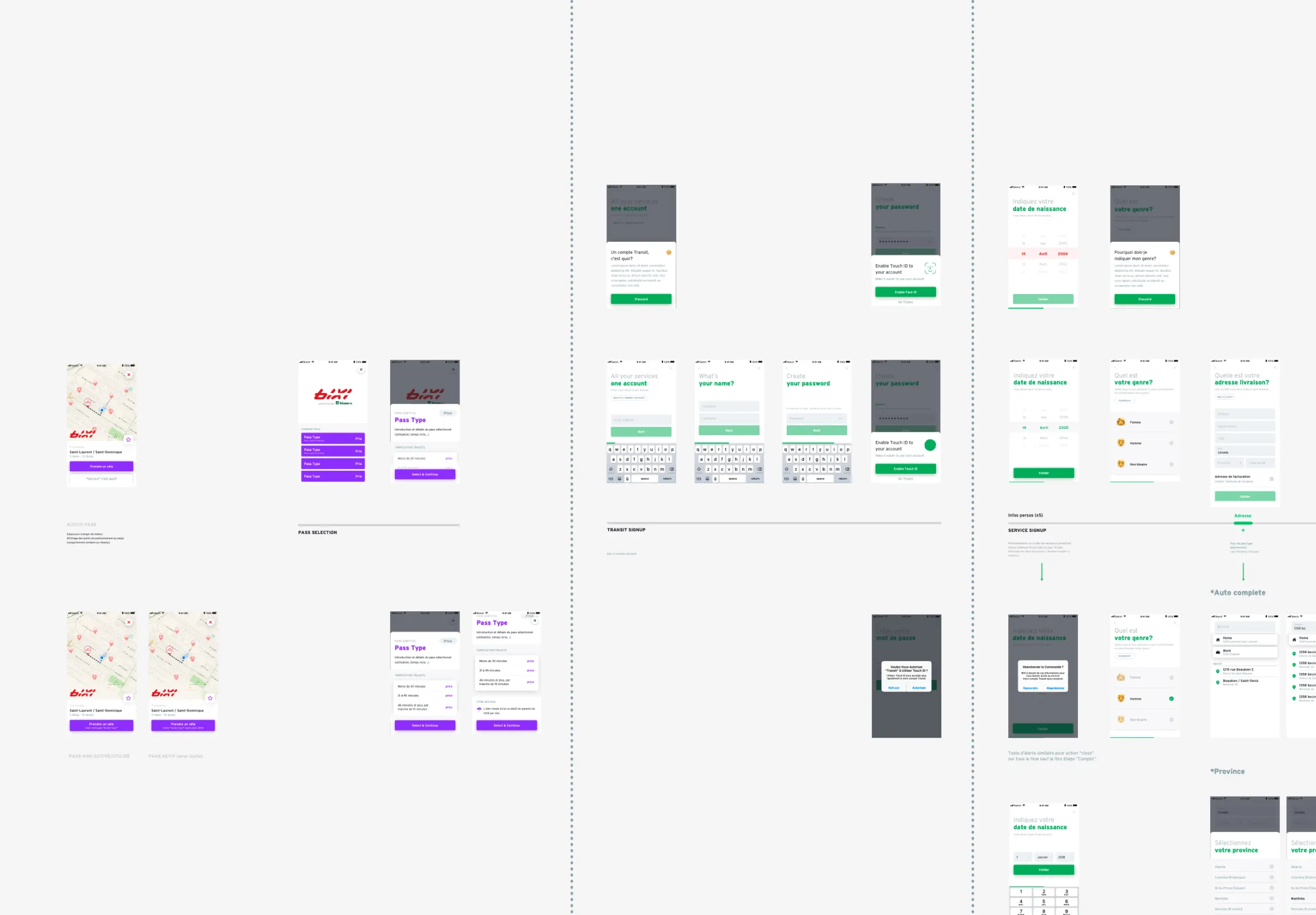
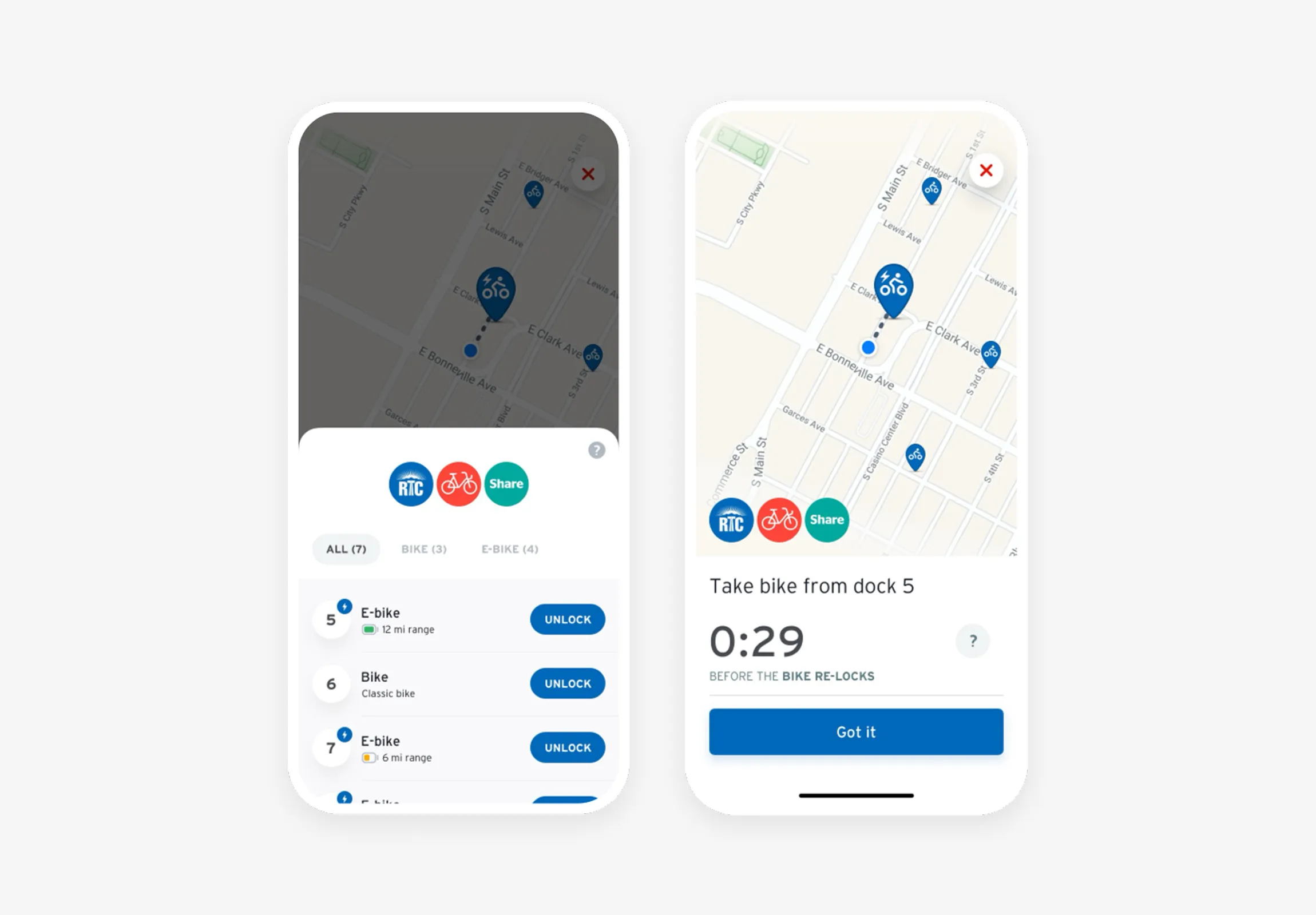
Bikeshare systems
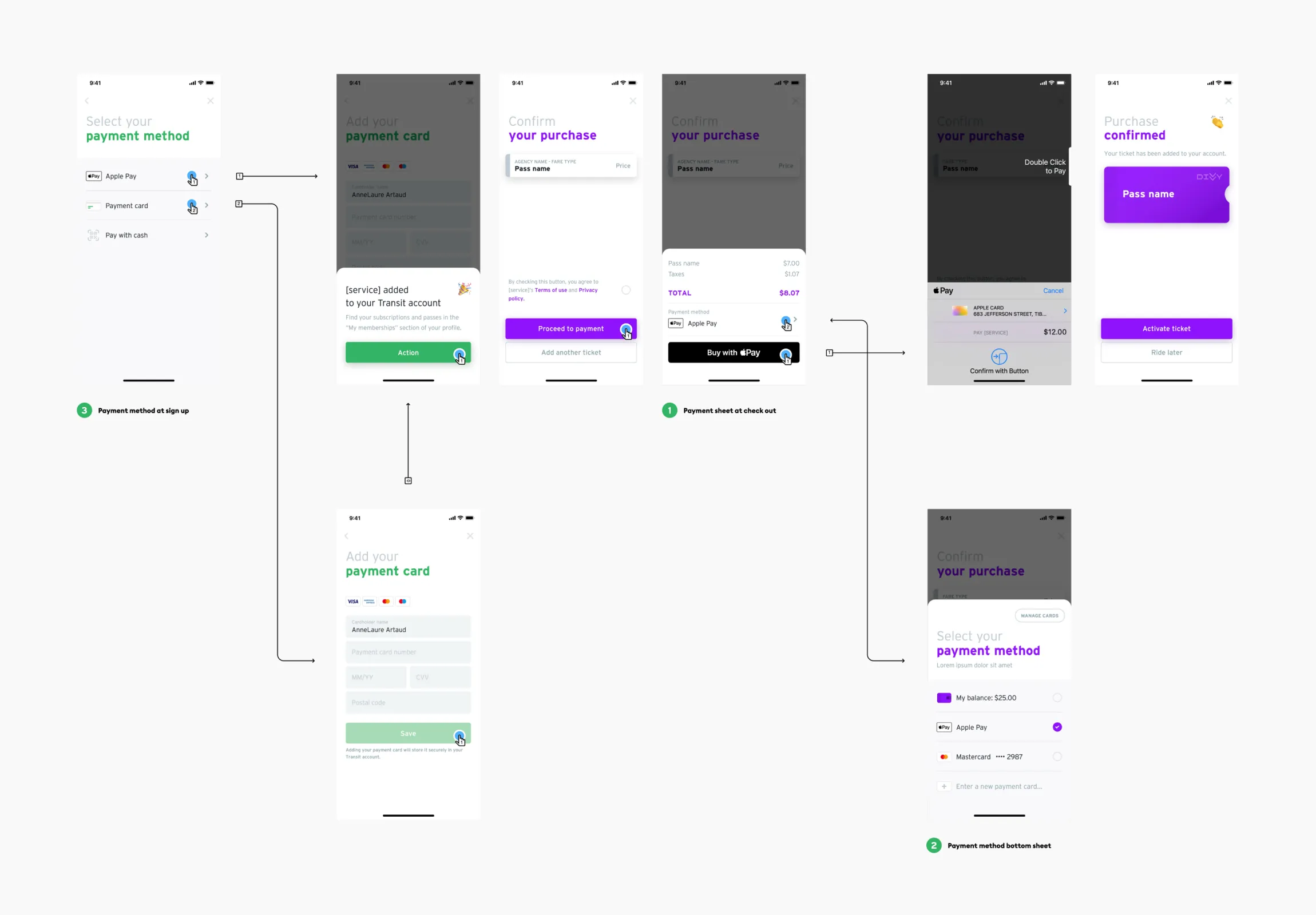
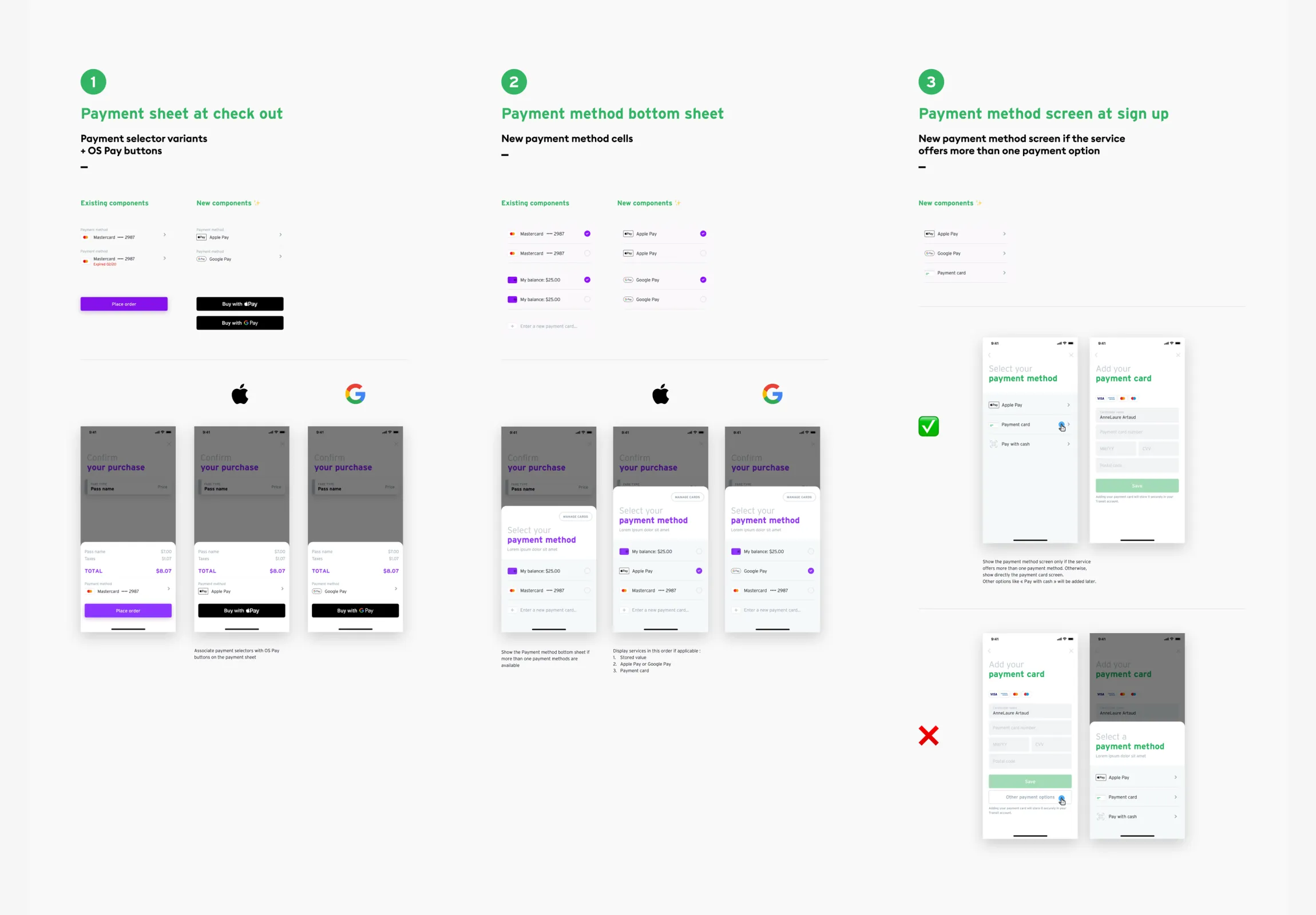
Apple/Google Pay integrations
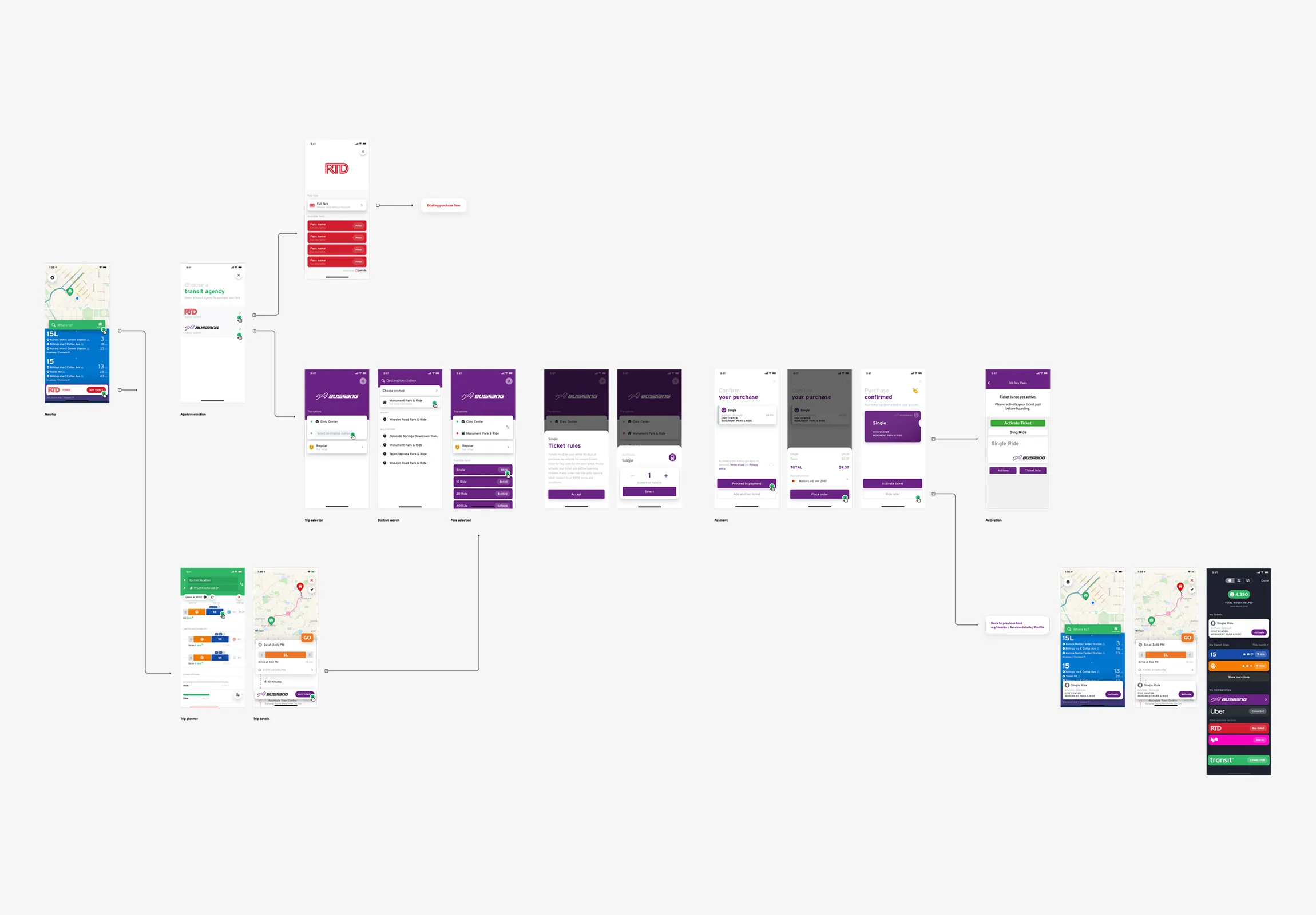
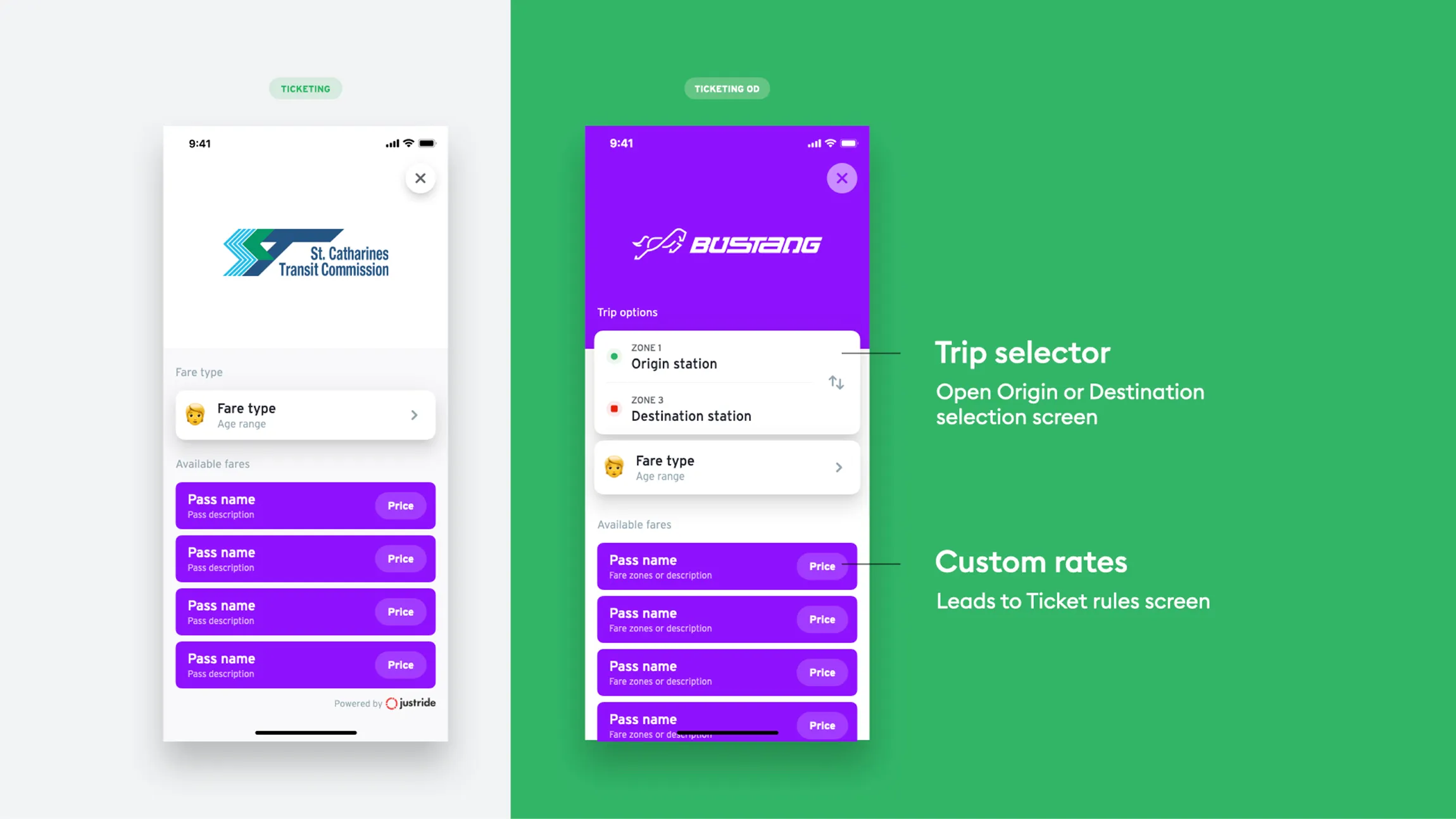
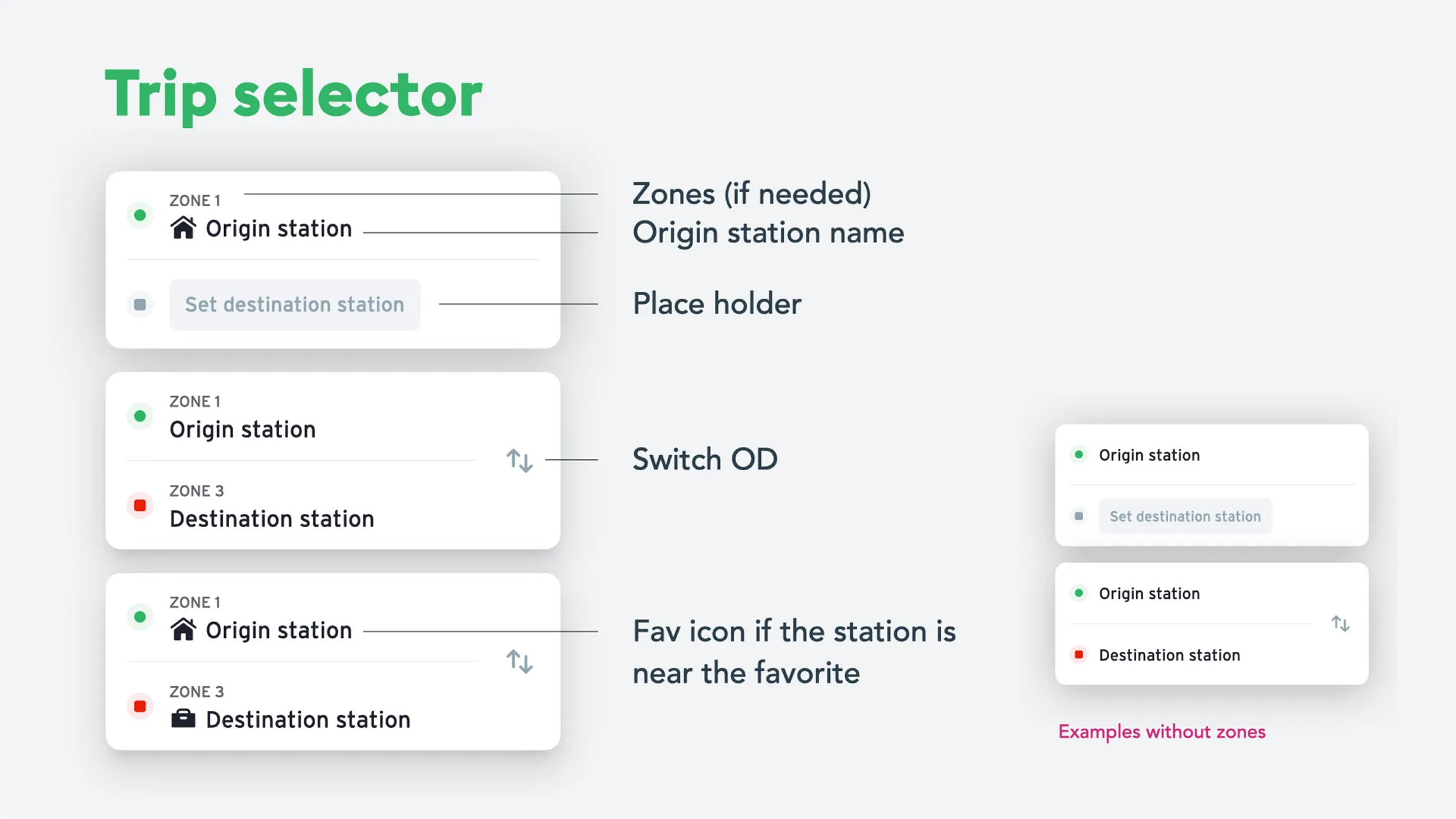
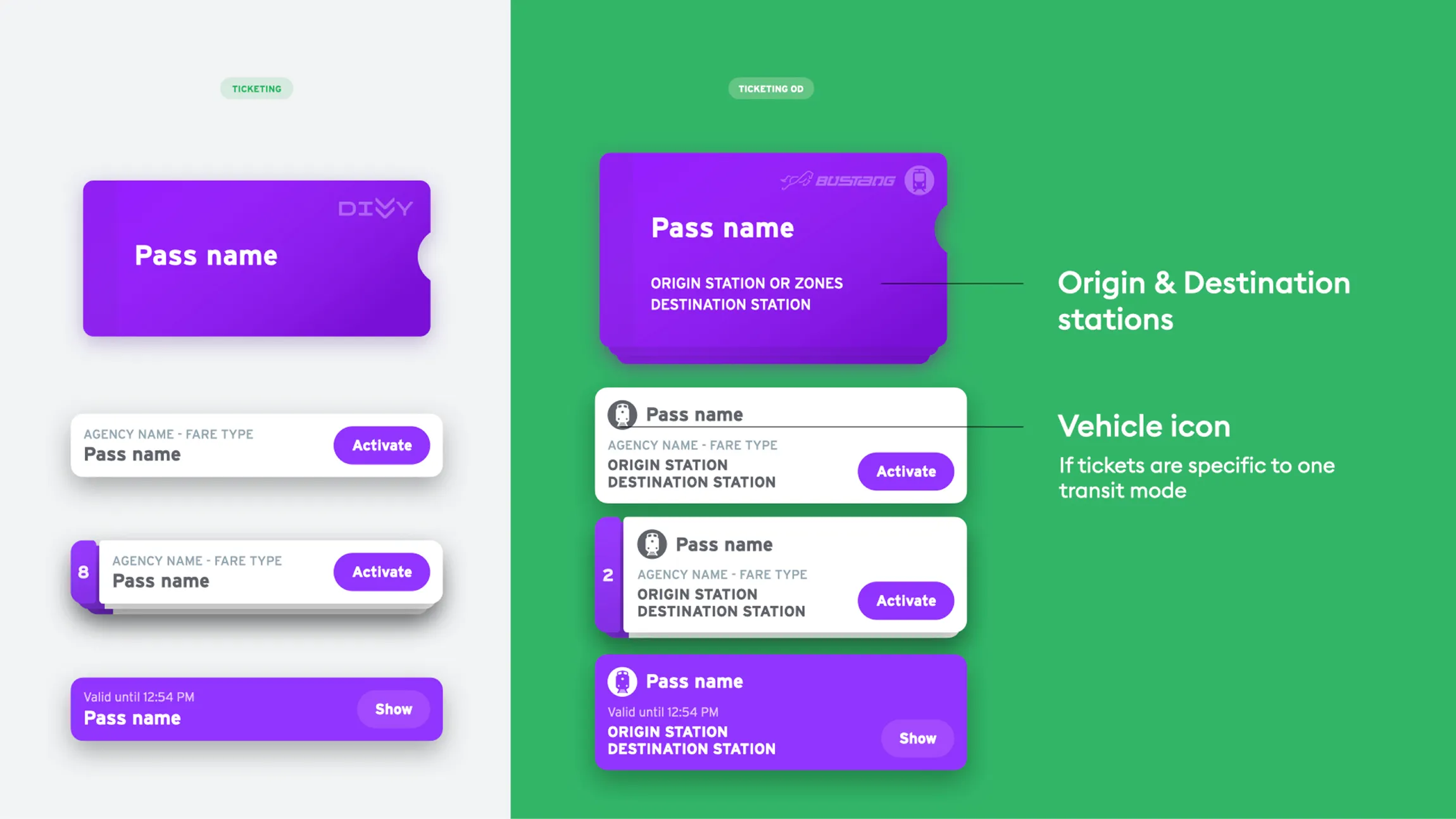
Origin/Destination Ticketing
Results
→ $8 million in fares sold over 5 years, across more than 65 transit networks in North America
→ 1 in 8 people using public transit in Canada opens Transit daily
→ In Niagara, sales went from $1,000 in the first month to over $500,000 per month
→ In Dayton (Ohio), cash payments dropped from 43% to 10% of boardings
Since then
What started as a ticketing project became a foundation on which essential projects and features could interlock, and from which new explorations emerged.
Transit’s first design system was also born from the systematization work carried out on Multipass — the structural starting point for the app’s components.
Internally, the project gave rise to its own division and allowed Transit to confirm its positioning as the indispensable app for users seeking to embrace a multimodal future close to their daily habits.
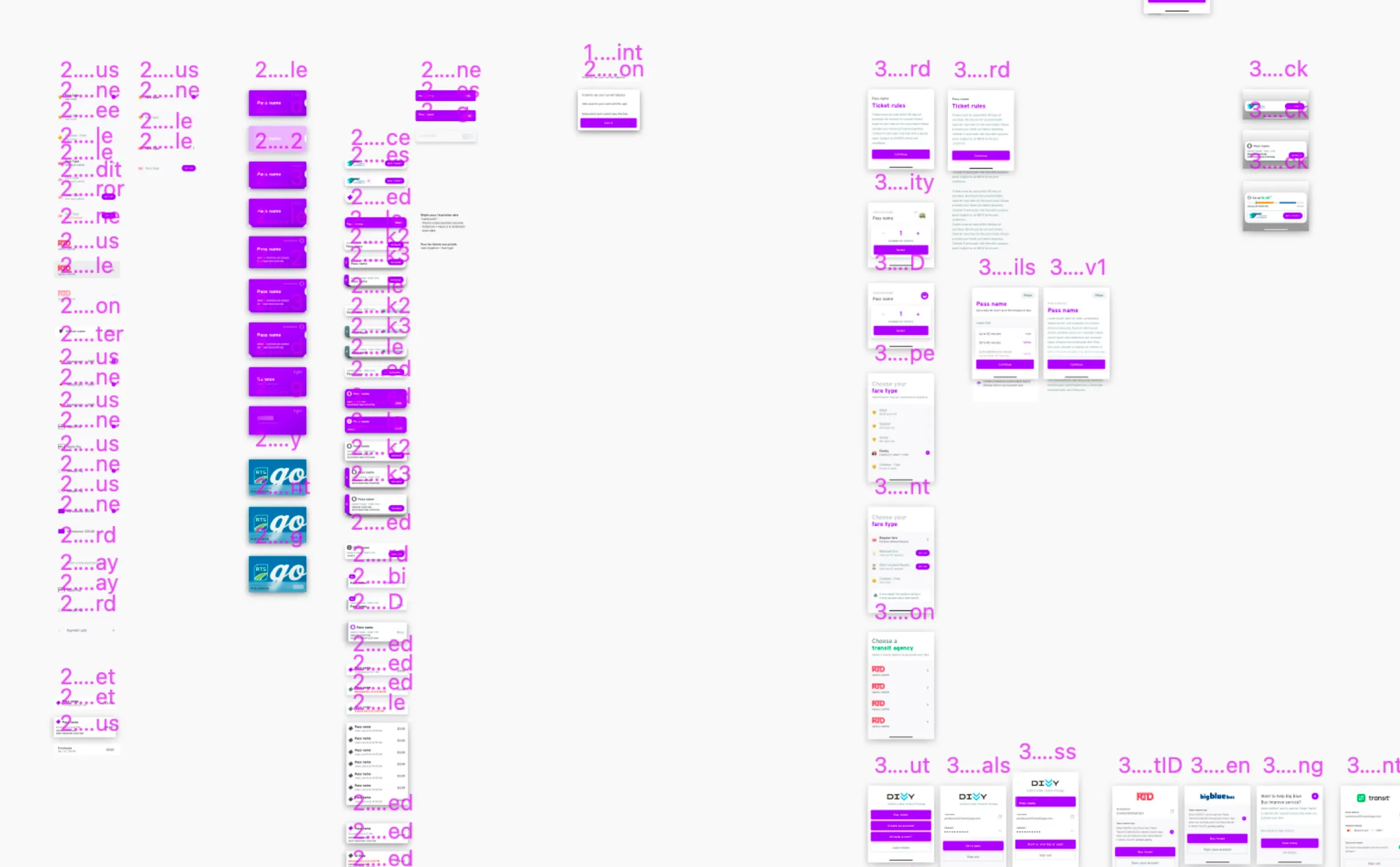
System components
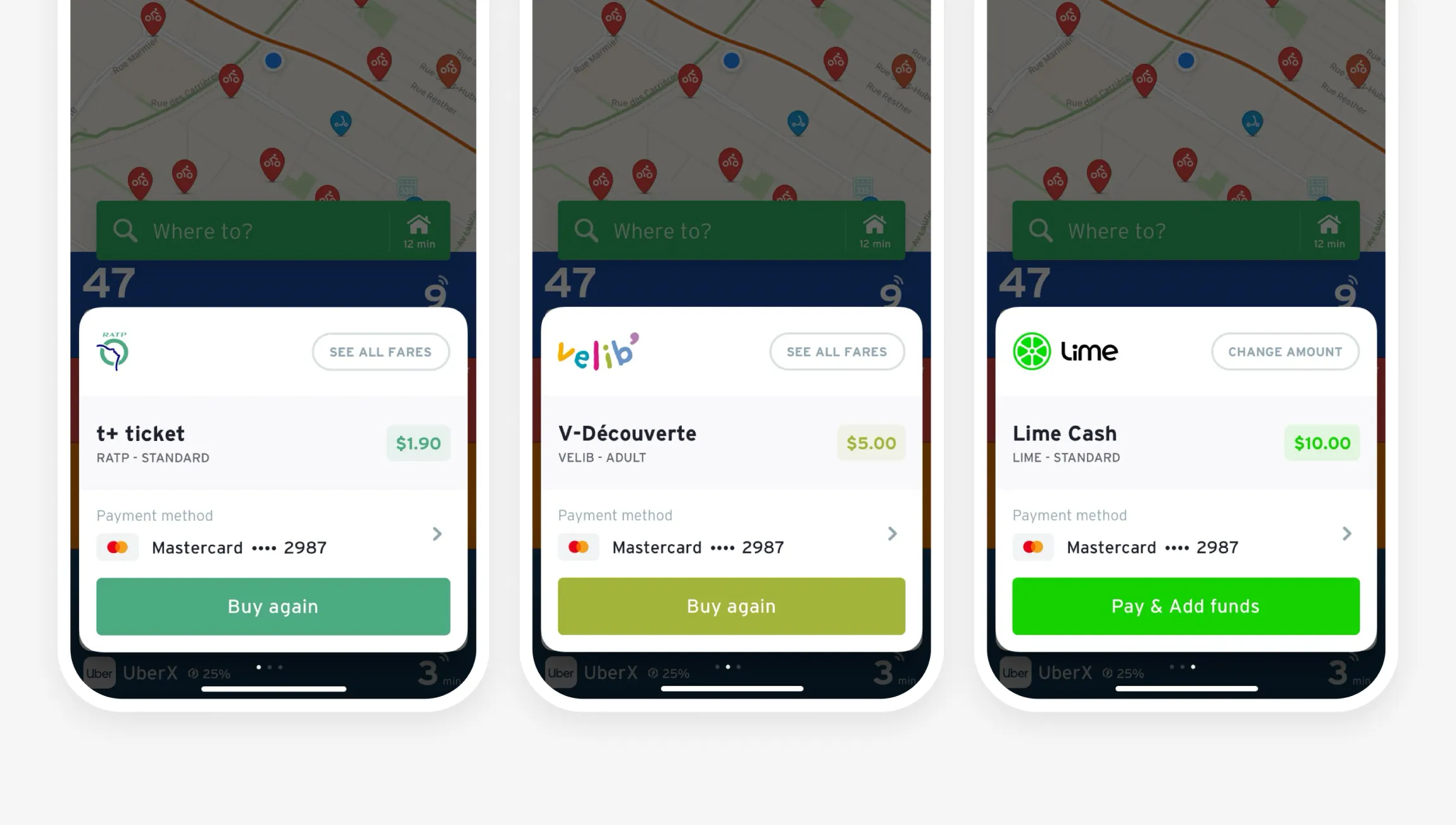
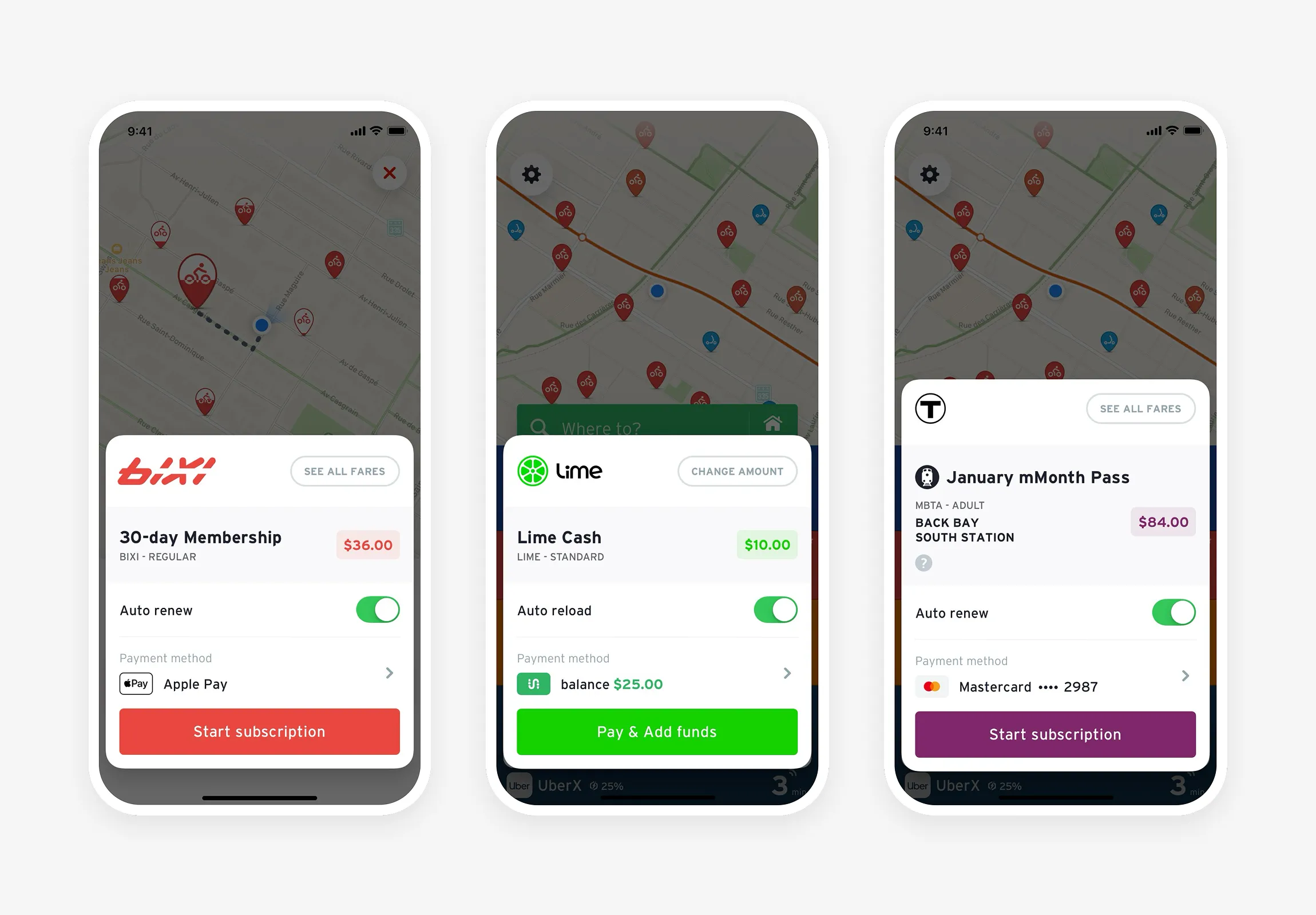
Quick Buy explorations